
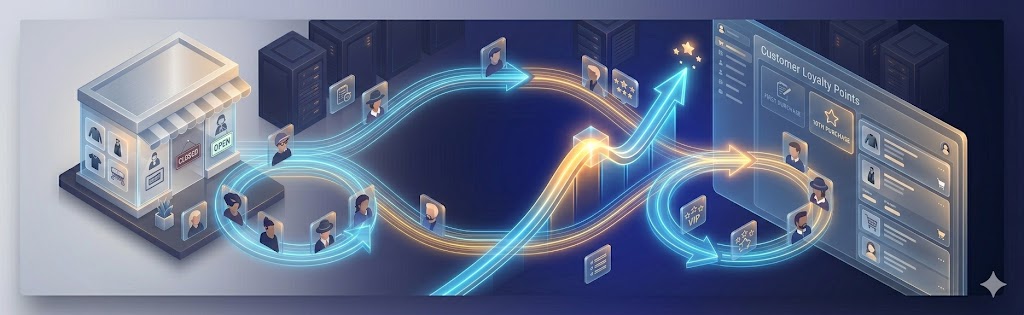
Most retention advice is a list of tactics — email flows, loyalty points, discounts. Here is what none of them fix: a returning customer who lands on a slow, clunky store, cannot find their reorder, or hits a checkout that fights them does not come back, no matter how good your email is. Retention starts with a store that does not frustrate the customer. This guide covers the tactics that work — and the experience problem that quietly cancels all of them.
Acquiring a new customer costs 5–7x more than retaining an existing one. A 5% increase in customer retention can increase profits by 25–95% (Bain & Company). For most Shopify stores, retention is the highest-ROI investment available.
Why Retention Beats Acquisition (The Numbers)
Most e-commerce brands spend 80% of their marketing budget on acquisition and 20% on retention — but retained customers spend 67% more on average than first-time buyers (BIA/Kelsey). The math strongly favors flipping that ratio once you have a product people want.
The most powerful retention metric isn’t repeat purchase rate in isolation — it’s Customer Lifetime Value (CLV). A customer who buys once at $80 AOV is worth $80. A customer who buys four times per year for three years at $80 AOV is worth $960. The Shopify stores I’ve seen grow most sustainably are the ones obsessing over getting customers to their third purchase, because three-time buyers have a dramatically higher probability of becoming long-term loyalists.
Email Marketing as Your #1 Retention Tool
Email has consistently the highest ROI of any retention channel for Shopify merchants — Klaviyo reports average ROI of $45 for every $1 spent. The retention email sequences that move the needle most:
- Post-purchase sequence: Order confirmation → shipping update → delivery confirmation → 7-day follow-up asking for a review → 30-day follow-up with related product recommendation.
- Win-back sequence: Triggered when a customer hasn’t purchased in 90 days. Starts with a value email, then a discount, then a final “we miss you” email. Win-back rates of 10–15% are achievable.
- Browse abandonment: Triggered when a logged-in customer views a product but doesn’t add to cart. Lower intent than cart abandonment, but still converts at 3–5%.
The key is personalization — using order history, browse behavior, and product tags to send emails that are actually relevant. Klaviyo’s Shopify integration pulls purchase data automatically; segmenting by product category purchased makes recommendations feel curated rather than generic.
Loyalty Programs on Shopify: Build vs. Buy
Loyalty programs work when the reward feels achievable and the earning mechanism is simple. “Earn 1 point per $1 spent, redeem 100 points for $5 off” is easy to understand. Overcomplicated tiered systems with multiple currencies confuse customers and reduce participation.
For most Shopify merchants, starting with Smile.io or LoyaltyLion is the right move — both integrate natively with Shopify and handle the points logic, email triggers, and redemption UI. For Shopify Plus merchants who want loyalty integrated into the checkout (points displayed during checkout, instant redemption, no friction), a custom implementation using Shopify Functions is worth the investment. I’ve built several of these — the conversion rate at checkout is measurably higher when customers can see their balance and redeem without leaving the checkout flow.
Post-Purchase Experience That Creates Repeat Buyers
The moment after a purchase is a high-trust, high-engagement moment that most brands waste with a generic “Order Confirmed” page. The order confirmation page and email are the two highest-open-rate communications you’ll ever send — and they’re almost always underoptimized.
What to add to your post-purchase flow:
- A personal thank-you message with a human name (not “The Team”)
- A single next-step recommendation (complementary product, not a full product grid)
- A referral offer (“Give $10, get $10”)
- Social sharing prompt with a pre-written caption
Shopify’s post-purchase upsell extensions (available on all plans, not just Plus) let you display a one-click upsell or cross-sell immediately after checkout — before the order confirmation page. Average uptake rates of 8–15% on well-matched offers make this one of the highest-ROI features in the Shopify ecosystem.
Personalization at Scale with Shopify Metafields
Shopify metafields let you store custom data on products, customers, and orders — and surface that data in Liquid templates, emails, and customer-facing interfaces. For retention personalization, the most valuable metafield use cases are:
- Product metafields for complementary product relationships (build recommendation logic in Liquid)
- Customer metafields to store preference data (size, flavor, frequency) collected post-purchase
- Order metafields to track which cohort a customer belongs to for segmentation
How Your Shopify Theme Design Affects Retention
Design affects retention in ways that aren’t always obvious. A slow-loading account page increases account deletion. A confusing reorder flow means customers search for the product on Google instead of coming back to your store (and may find a competitor). A mobile experience that requires zooming or horizontal scrolling trains customers to shop on desktop only — meaning they shop less frequently.
Custom Shopify themes allow you to design the account area, order history, and reorder flows specifically for your customers’ use cases. Template-based themes give you the theme developer’s default account template, which is optimized for the average store, not your store.
The Retention Killer No Discount Email Can Fix
You can run flawless email flows and a generous loyalty program and still leak customers, because all of those tactics assume the store itself is a pleasure to come back to. A returning buyer is a tougher audience than a first-timer — they already know your brand, so a slow load, a checkout that fights them, or a reorder they cannot find does not read as a minor bug. It reads as “this brand got worse,” and they quietly stop coming.
Speed is the sharpest edge of this. Your best customers shop from a phone, often on the move, and they bail faster the second time because their patience is already spent on you. A four-second load is a retention leak that no win-back email can plug. The store experience is a retention lever every bit as much as an acquisition one.
Fix the experience first and every other tactic compounds instead of leaks. It is why the custom Shopify and custom theme builds we ship average 92 on Lighthouse — so returning customers meet a fast, clean store, and your email and loyalty spend actually pays off.
Measuring Retention: Key Metrics and How to Track Them
The metrics that matter for Shopify retention:
- Repeat Purchase Rate (RPR): % of customers who bought again in 12 months. Target: 30%+
- Customer Lifetime Value (CLV): Average revenue per customer over their lifetime. Calculate: AOV × Purchase Frequency × Average Customer Lifespan.
- Churn Rate: % of customers who haven’t purchased in 90+ days and never return. Use Shopify Analytics cohort reports.
- Email engagement rate: Open rate and click rate on post-purchase and retention sequences. Declining open rates are an early warning signal.
Frequently Asked Questions
Highest-ROI tactics: post-purchase email sequence, loyalty points program, personalized product recommendations, and subscription offers for repeat-purchase products. Start with email — it has the highest measurable ROI and integrates natively with Shopify via Klaviyo.
Acquiring a new customer typically costs roughly 5–7x more than retaining an existing one, and existing customers spend more over time and convert at higher rates than first-time visitors. That’s why even a few points of improvement in repeat-purchase rate usually beat the same spend on ads: you compound revenue from people who already chose you, with no new acquisition cost attached.
Industry average is 25–30% annual retention. Top-performing DTC brands achieve 40–60%. The key metric to watch is repeat purchase rate — what percentage of customers who bought once bought again within 12 months. Above 30% is strong for most product categories.
Prioritize four automated flows in Klaviyo or Shopify Email: a post-purchase / thank-you sequence, a replenishment or reorder reminder timed to your product’s usage cycle, a win-back flow for customers who’ve lapsed past their normal buying window, and a VIP / loyalty flow for repeat buyers. They run on autopilot and drive the highest retention ROI because they reach customers exactly when they’re most likely to buy again.
Focus on the post-purchase experience: branded unboxing, personal follow-up email within 48 hours, and a simple reorder path. Then layer in loyalty rewards, personalized recommendations, and win-back campaigns. Getting customers to their third purchase is the critical inflection point.
For most stores, buy — apps like Smile.io or LoyaltyLion get you live in days at a predictable monthly cost. Build custom only when you’ve outgrown the apps: when you want points visible and redeemable inside the checkout (Shopify Plus + Shopify Functions), need deep integration with your own data, or the per-order app fees start exceeding development cost at scale. Start with an app, validate engagement, then invest in custom if the numbers justify it.
Smile.io for most DTC brands (fast setup, clean UI). LoyaltyLion for more customization and B2B features. For Shopify Plus merchants who want checkout-integrated loyalty (points visible and redeemable during checkout), a custom solution with Shopify Functions delivers the best UX but requires development investment.
Track repeat purchase rate (share of customers who buy again), customer lifetime value (AOV × purchase frequency × average lifespan), churn rate (customers inactive 90+ days), and purchase frequency. Shopify Analytics cohort reports show how each month’s new customers behave over time — the clearest way to see whether retention efforts are working. Watch email open and click rates too; declining engagement is an early warning before churn shows up in sales.
Retention is the measurable outcome – keeping customers buying again over time. Loyalty is the underlying attitude – customers actively preferring and advocating for your brand. Loyalty drives retention, but you can retain customers through convenience or pricing without true loyalty, so it helps to build both.
Subscriptions turn one-off buyers into recurring revenue by automating repeat purchases for consumable or replenishable products. They increase customer lifetime value, smooth revenue, and reduce the effort customers spend re-ordering – just pair them with easy management and good service to keep churn low.
Start immediately with a strong post-purchase sequence – order confirmation, shipping updates, and a thank-you or how-to follow-up – then time the next nudge to your product’s repurchase cycle. Re-engaging around when a consumable runs out, rather than on a generic schedule, drives the most repeat sales.
Prioritize your highest-value and most frequent buyers, and customers showing early repeat behavior – they offer the best return on retention spend. Segment by value and recency, win back recently lapsed high-value customers, and avoid over-investing in one-time bargain hunters unlikely to return.
No – they assume the store is a pleasure to return to. A returning customer already knows your brand, so a slow load, a checkout that fights them, or a reorder they cannot find reads as the brand getting worse, and they quietly stop coming. Speed is the sharpest edge: your best customers shop from a phone and bail faster the second time, so a four-second load is a retention leak no win-back email can plug. Fix the store experience first and your email and loyalty spend compounds instead of leaking. Store experience is a retention lever, not just an acquisition one.
Related Services
Related Shopify services to help you grow and keep more customers.
Shopify Optimization Services
Speed, UX, and conversion optimization for Shopify stores.
View service